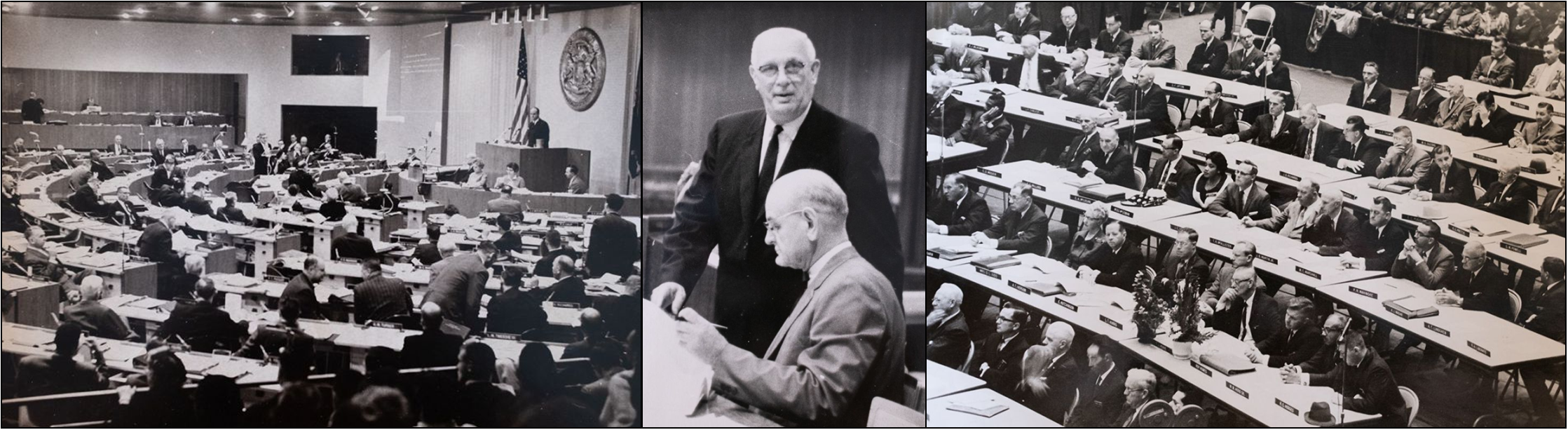
Michigan’s mainstream media is now controlled by out-of-state wealthy special interests—and it makes a difference in their coverage of Proposal 1
The following type of commentary could not be published in a Michigan mainstream news outlet, and I did not even try, as mainstream local news outlets do not publish media criticism focusing on media ownership bias, a type of special interest bias quite different from partisan bias. Thus, I am publishing it here as a blog post.
- - - - - - - - -
Major local news media—most recently the Michigan Advance—continue to omit mention of the dark money and other campaign contributions funding the opposition to Proposal 1 via the "No" coalition under the ballot committee named Protect MI Constitution from Special Interests. This is not out of ignorance, but willful blindness. All of these outlets know about this funding; indeed, my own reporting on these contributions draws directly from public campaign finance filings—the very records these newsrooms routinely cite when covering candidates and other ballot questions, including the other statewide measure on this year's ballot.
A second critical omission concerns the indirect funding of the organizations serving as the public face of Protect MI Constitution from Special Interests. Chief among them is Voters Not Politicians, heavily featured in the Michigan Advance piece. The group has accepted millions of dollars from the same entities underwriting Protect MI Constitution from Special Interests. Whatever its origins as a genuine grassroots citizens' initiative, Voters Not Politicians can no longer claim that mantle. The Michigan Advance—and the other outlets spotlighting the group as the principled face of the opposition—should have made that financial link transparent.
This silence makes sense in light of the mainstream media's institutional ties to wealthy, out-of-state special interests. For example, Michigan Advance is part of States Newsroom, a network founded and initially backed by the Hopewell Fund —a dark-money vehicle tied to Arabella Advisors and the wider web of nonprofit funders working against state constitutional conventions nationwide. While States Newsroom lists hundreds of donors on its website, it does not reveal specific contribution amounts, even though a mere three donors account for more than 85.6% ($12,549,118 + $9,700,000 +$1,258,379/$27,454,229; see Schedule B of its 2024 Form 990, p. 22) of its financial support. (This opacity underscores why IRS Form 990 schedules mandate disclosing major donors, even if networks like Arabella can still obscure ultimate sources behind daisy chains of 501(c) entities.) Notably, two of States Newsroom’s named donors—amounts withheld—are the North Fund and Global Impact, the latter of which is among the three primary dark-money bankrollers of Protect MI Constitution from Special Interests. Michigan Advance’s reluctance to scrutinize campaign finance networks, including its own, is hardly surprising. People who live in glass houses must be wary about throwing stones.
Outside of its October 5, 2026 article, the outlet’s coverage has tilted heavily toward the opposition's narrative. For example, Michigan Advance published a commentary by a spokesperson for the "No" coalition without disclosing his financial ties to the campaign until six months later. To date, the site has run two commentaries opposing the convention and only one supporting it—published eight months ago, in February 2026.
Yet Michigan Advance is not an isolated bad actor. Across Michigan, local newsrooms share a broader hostility toward the convention process, reflected in their collective failure to track campaign cash and examine recurring interstate donor networks. Over the past sixteen years, most of Michigan’s legacy newspapers have come under the control of hedge funds and corporate conglomerates—such as GateHouse Media (now operating under the USA Today banner), whose local footprint includes the Detroit Free Press and The Detroit News (Democratic and Republican leaning newspapers respectively, both serving the same market).
USA Today owns over 100 daily newspapers and nearly 1,000 weekly newspapers across the United States. Here are its holdings in Michigan:
- Detroit Free Press
- The Detroit News
- Lansing State Journal
- Battle Creek Enquirer
- The Holland Sentinel
- Livingston County Daily Press & Argus
- The Monroe News
- The Morning Sun
- Petoskey News-Review
- The Sault News
- Hillsdale Daily News
- Sturgis Journal
- Charlevoix Courier
- Cheboygan Daily Tribune
- Gaylord Herald Times
- Ionia Sentinel-Standard
- Michigan Lawyers Weekly
Corporate owners view a citizen-led constitutional convention as an unpredictable risk to their balance sheets. Surprisingly, their profits depend heavily on what Lansing does. For example, much of their profit now comes from state legislature mandated legal ads, and much of their other profit comes from regional advertisers and business clients that belong to the local chambers of commerce and business coalitions who oppose the convention process because such groups excel at influencing the legislature and fear they won't be able to exert similar influence over a convention.
In 2010, the Detroit Free Press ran this editorial in favor of calling a convention:
The Free Press supports a "yes" vote on the Nov. 2 ballot issue (Proposal 10-1) asking voters to authorize a constitutional convention in 2011....
Lawmakers will never change their own reality.
So Michiganders ought to do it for them....
Opponents of a convention sometimes suggest that the Constitution can be fixed gradually, through the amendment process. But lawmakers will never propose any of the fixes themselves, and moneyed interest groups will not propose and fund campaigns for most of the needed changes because they're happy with the current political landscape.
Contrast that with this editorial that ran in Michigan USA Today outlets, including the Detroit Free Press, in 2026:
We believe emphatically that our fellow Michiganders must again vote NO on Proposal 1. Why?
Because practically, a Con-Con is unneeded. The people, or the Legislature, can propose changes through the amendment process outlined in our constitution....
Michigan's Constitution is strong, ensuring all of us the needed authority to oversee good governance in our state. We need to maintain and protect the constitution we have. On Nov. 3, vote NO on Proposal 1.
What changed between 2010 and 2026 that can explain the difference in the editorial board's position? One major difference is the ownership of the Detroit Free Press, as USA Today's ownership determines its editorial board's position.
A maxim known to all experienced journalists is that news media owners, including their financial interests, don't want to be part of the story. That maxim is interesting because it can conflict with journalistic ethics, and in this case, it does.
--by J.H. Snider, Oct. 5, 2026 (revised Oct. 17, 2026)
The Relevant Constitutional Text
Michigan Constitution
Article XII - AMENDMENT AND REVISION
§ 3 General revision of constitution; submission of question, convention delegates and meeting.
Sec. 3. At the general election to be held in the year 1978, and in each 16th year thereafter and at such times as may be provided by law, the question of a general revision of the constitution shall be submitted to the electors of the state. If a majority of the electors voting on the question decide in favor of a convention for such purpose, at an election to be held not later than six months after the proposal was certified as approved, the electors of each representative district as then organized shall elect one delegate and the electors of each senatorial district as then organized shall elect one delegate at a partisan election. The delegates so elected shall convene at the seat of government on the first Tuesday in October next succeeding such election or at an earlier date if provided by law.
Convention officers, rules, membership, personnel, publications.
The convention shall choose its own officers, determine the rules of its proceedings and judge the qualifications, elections and returns of its members. To fill a vacancy in the office of any delegate, the governor shall appoint a qualified resident of the same district who shall be a member of the same party as the delegate vacating the office. The convention shall have power to appoint such officers, employees and assistants as it deems necessary and to fix their compensation; to provide for the printing and distribution of its documents, journals and proceedings; to explain and disseminate information about the proposed constitution and to complete the business of the convention in an orderly manner. Each delegate shall receive for his services compensation provided by law.
Submission of proposed constitution or amendment.
No proposed constitution or amendment adopted by such convention shall be submitted to the electors for approval as hereinafter provided unless by the assent of a majority of all the delegates elected to and serving in the convention, with the names and vote of those voting entered in the journal. Any proposed constitution or amendments adopted by such convention shall be submitted to the qualified electors in the manner and at the time provided by such convention not less than 90 days after final adjournment of the convention. Upon the approval of such constitution or amendments by a majority of the qualified electors voting thereon the constitution or amendments shall take effect as provided by the convention.
History: Const. 1963, Art. XII, § 3, Eff. Jan. 1, 1964.
Former constitution: See Const. 1908, Art. XVII, § 4.
Citation: MI Const art XII § 3
The Basic Process

Michigan Convention Timeline
Note: The following ratification information is only for the convention's proposed revision of the constitution, not its proposed amendments. Michigan has a tradition of using conventions primarily for revision but many other states have used conventions for amendment. For example, New Hampshire has the second oldest constitution in the world but has held fifteen conventions since that revision was passed. The others have all been used to propose amendments, not revisions.
If voters approve the convention call
The Law Banning Legislature from Running for Delegate
The landmark Michigan Supreme Court ruling that established this restriction is Fyfe v. Kent County Clerk, 149 Mich. 349, 112 N.W. 725 (1907).
In 1907, Michigan voters approved a referendum to convene what would become the 1907–1908 Constitutional Convention. Several sitting members of the Michigan Legislature sought to run for election as convention delegates. Election officials (including the Kent County Clerk) refused to certify them or place their names on the ballot, prompting the lawmakers to sue.
The Michigan Supreme Court rejected the lawmakers' arguments and held that sitting legislators are legally barred from serving as convention delegates. One of the three reasons they provided was to prevent self-dealing and conflicts of interest. The Court asserted the fundamental anti-corruption purpose of the clause: lawmakers cannot enact enabling legislation calling an assembly, appropriate funds, and set delegate compensation, and then fill those lucrative or powerful positions themselves.
In Young v. Detroit City Clerk, 389 Mich. 333 (1973), the Michigan Supreme Court conducted an exhaustive review of Fyfe and reaffirmed its core holding. The Court explained that while Article IV, Section 9 does not bar a state lawmaker from running for a local municipal office (such as Mayor of Detroit), it strictly bars lawmakers from seeking or holding an office that is state-level in character, created by the legislature, or compensated by state statute—criteria that a constitutional convention delegate squarely meets.
Because of Fyfe and Article IV, Section 9, a sitting Michigan lawmaker who wishes to run for and serve as a delegate to a constitutional convention would have to resign from the Legislature prior to taking the oath as a delegate. This structural firewall ensures that the body drafting higher constitutional law remains institutionally distinct from the sitting legislative officials whose powers are being regulated and checked.
The purpose of these provisions... as we said in Ellis v. Lennon, 86 Mich. 468, speaking through Justice McGrath, “to prevent officers from using their official position in the creation of offices for themselves or for the appointment of themselves to place.”
The Law Allowing a Convention to Propose Amendments (rather than only revisions)
The following is merely the most recent Michigan Supreme Court case reaffirming that a convention can propose amendments as well as a replacement constitution:
What is meant by revision or to revise? Why simply to re-examine for the purpose of correction—the act of reviewing or reexamination for the purpose of correction.” The “revision” is simply the process for reconsidering the constitution as a whole. It is not, as some Court of Appeals opinions suggest, a particular document or proposed change. Thus a “revision” is not contradistinguished from an “amendment.” Rather, as noted, the distinction between the Article 12, § 3 convention process and the Article 12, § 2 amendment process is that the former can produce a proposed constitution, while the latter is limited to proposing less sweeping changes.
Fact vs. Myth: Corrections to Widely Reported Convention Facts
Reported by Michigan News Media
Limits on What a Convention Can Propose
Consitutional convention opponents seek to make changing Michgan's constitution sound as risky as possible. One way they do that is by making it sound like the only option for a conventnion is to change the entire constitution in one revision. But a convention is under no obligation to do so. As many conventions in other states have done, it can propose only amendments to the existing constitution. For example, New Hampshire has the second oldest constitution in the world yet has held 16 conventions, each one of which only proposed amendments to the existing constitution. After its statehood convention, Michigan has half the time taken a middle course: proposing a general revision plus amendments incorporating more controversial proposals.
Unfortunately, Michigan's press has adopted the spin of convention opponents on this and other convention issues. For example, Michigan Public Radio has described the last stage of the convention process as follows: "Once the majority of delegates agree on a draft, it then goes back to voters for final approval. If voters say no to the new constitution, the current constitution remains in effect." Although that's what a conventinon could do, it's a fundamentally misleading statement about what a convention must do.
Unfortunately, Michigan's leading public policy institute that has written on this subject has perpetrated this and other myths in its misleading history of Michigan's conventions, which fails to describe how Michigan conventions have made multiple proposals, including individual amendments, not just general revisions. Unfortunately, this misleading history has been echoed in the press
Michigan's Convention History
Michigan conventions have a history of making a primary proposal and secondary proposals, where the primary proposal includes many proposals bundled into a single revision, and the secondary proposals are individual amendments that involve controversial proposals, such as extending suffrage to blacks in 1850, which the convention feared would kill its other proposals if bundled into one proposal. Thus, the convention offered it to the public as a separate proposal.
1850 Constitutional Convention
On November 5, 1850, voters approved the primary constitutional proposal (36,169 to 9,433) while rejecting the secondary proposal (12,840 to 32,026). Had suffrage been embedded directly within the text, it likely would have threatened ratification of the entire constitution.
1867 Constitutional Convention
This time the primary proposal incorporated Black male suffrage directly into the main text rather than separating it as an amendment.
The secondary proposals were amendments to: 1) prohibit regulation of the sale of intoxicating liquors, and 2) change legislative sessions from meeting annually vs. biennieally.
Both the primary and secondary proposals were defeated.
In 1907-1908 and 1961-1962, the conventions only produced primary proposals, which both passed. Given the experiences of 1850 and 1867, controversial, high-risk proposals were avoided.
Correction
I wrote to the Michigan Public Radio reporter and, to his credit, he partially corrected his article on August 26, 2026, two days after it was originally published. The correction reads:
After this story intitially published, we got an email from J.H. Snider pointing out that the delegates are not required to draft an entirely new constitution. They would also be allowed to submit amendments to the constitution, or submit a new constitution plus additional amendments, and voters would decide each separately.
I applaud Michigan Public Radio for making this correction. But I would add that there are at least a half dozen other news media outlets that have made the same error without making a correction.
The Democratic Function of a Convention
Convention opponents claim that the democratic function of a convention is to update a constitution, a function that can be equally well served by other constitutional change mechanisms. In fact, the convention process was created in Massachusetts in the late 1770s because in the then new era of written constitutions, it was recognized that a state legislature had an inherent conflict of interest in designing its own powers. Hence, an external body would have to be created to propose changes to a written constitution and those proposed changes would have to be directly ratified by the people if they were to become law.
Unfortunately, Michigan's press has adopted the spin of convention opponents on this issue. In a breathtakingly biased analogy, Michigan Public Radio compares the 16-year convention referendum to "cicada broods," which are widely considered a pest. That would be like saying that periodic legislative sessions are also like cicada broods. Periodic sessions were created to prevent the king or governor from not calling them, which was a major problem in the lead-up to the Revolutionary War.
The periodic convention was created because the framers understood that legislatures were the natural enemies of the convention process, which would take away a legislature's monopoly power over constitutional agenda-setting. Consequently, a legislature wouldn't call one, especially when it feared a convention might make it more democratically accountable. Placing it automatically on the ballot at periodic intervals was a workaround that conflict-of-interest problem.
But cicado broods are mere metaphor. The same Michigan Public Radio article explains the reason for the convention process, which closely follows the opposition's talking points: "The idea is to have a regular mechanism in place for citizens to decide whether the state’s constitution truly matches its time." Voilla, there is no need for a convention process to fill this function, as Michigan's legislature can fill this function just as well.
Alas, the Citizens Council of Michigan has not helped matters by making the following highly misleading claims, as reported by Michigan Advance:
Eric Lupher, president of the nonpartisan Citizens Research Council (CRC) of Michigan, told the Michigan Advance that the idea to make the option for a convention a regular feature came from the Con-Con that produced the 1963 constitution.
“They said, ‘Well, let’s just be proactive about saying we’re going to ask you on a regular basis.’ If you feel like things are working well and if you say no, we just go on with life as normal. But if not, then we dig into a process,” said Lupher.
The first claim is misleading because the original periodic constitutional convention referendum was created by Michigan's 1850, not 1963, convention. But that may merely be a reporting or lapsed memory error, and it's also true that the convention leading to the 1963 Constitution did reinsert the periodic convention referendum clause into its proposed constitutional revision.
The second claim concerning why that provision is in the constitution is much more troubling, especially because it has been repeated by other media outlets. The 1850 convention placed the periodic convention referendum provision into Michigan's Constitution because it didn't trust the legislature to call a convention when it was needed and the people therefore wanted one.
As also reported in another Michigan Advance article:
[T]he Citizens Research Council is working hard to explain to Michigan’s voters the nuances of a complex question — whether or not the state should take on a Constitutional Convention in 2027.
It’s just the latest in a long series of issues the council has taken on since its founding, seeking to provide analysis and research of Michigan’s public policy issues without a partisan or ideological slant, which the group has been doing since 1916.
But the above analysis suggests that they haven't gotten the "nuances" right, if by right means the nuances of the historical record. But if it means how to appear not to be taking a side in a news media environment overwhelmingly dominated by "no" coalition messaging, it has indeed gotten the "nuances" right.
Countdown to Convention Referendum
Day(s)
:
Hour(s)
:
Minute(s)
:
Second(s)


The Legislature's Ballot Text
The legislature-created wording on the ballot (see below) is misleading in that the Constitution grants a convention the option to either amend or revise the Constitution. By suggesting a convention can only propose revisions to the Constitution, it enhances the perception of risk surrounding the call of a convention, and in that sense it is biased against calling a convention.

I think our government is a 20th century government, and we're in the 21st century. It needs to change…. No one loves how our government works, so we need to change it…. I think that Michiganders understand that.
[The 1961 convention delegates) clearly were good citizens…. They really were interested in improving Michigan government…. You had so many exceptional people at the last convention…. A state convention is the closest form of government to the people, because no matter what the delegates come up with, the people have to ratify it.
A Constitution alterable by the Supreme Legislative is no Security at all.
We are not sent here to telegraph from one end of the union to the other, from Maine to California, for constitutions upon which to model our own... but to make those few amendments to our excellent constitution which people require.

Book Summaries
Snider, J.H., As America Turns 250, We’re Forgetting the Declaration’s Most Fundamental Right, The Renovator, August 21, 2026. Short summary.
Snider, J.H., A Case for Revising State Constitutional Conventions, Expand Democracy, June 15, 2026. Medium summary.
Snider, J.H., J.H. Snider Substack, May 26, 2026. Long summary (combines the Election Law Blog Book posts into a single, revised essay).
Snider, J.H., Election Law Blog Book Corner, May 11-14, 2026. Summary in four separate posts:
Campaign Finance Reports
See the Campaign Finance Menu above for detailed campaign finance information.. That page includes an AI-based analysis of the data.
The following is a public TV documentary on Michigan's 1961 constitutional convention.
Surveys
Public Opinion Surveys
Sept. 9, 2026: "Those surveyed for The Detroit News-WDIV-TV (Channel 4) poll indicated they would vote yes on Proposal 1, a question posed every 16 years to hold a constitutional convention, by a margin of 47% to 31%. About 22% of those surveyed remained undecided." From LeBlanc, Beth, Michigan voters back Con-Con, 'money out of politics' ballot proposals, poll finds, Detroit News, Sept. 9, 2026.
Primary Source: Glengariff Group, Inc. September 2026 Survey. See question #18, page 31.
Prediction Markets
An alternative to a survey comes from Polymarket, which takes bets on whether Michiganders will vote for a convention on Nov. 3, 2026. Polymarket betters would take into consideration the overwhelming advertising and other campaign advantages the "No" Coalition has going into the home stretch of the election cycle. In that sense, they may be more accurate.
Polymarket 2026 ConCon Prediction
Past Predictions
March 10, 2026: 47% yes; 53% no.
April 7, 2026: 53% yes; 47% no.
April 20, 2026: 50% yes; 50% no.
August 10, 2026, 5% yes: 95% no.
Sept. 9, 2026. 4% ues; 96% no.
Illustrative Democratic Problems Michigan's Legislature Is Not Fixing
Reports
States With Anti-Corruption Measures for Public Officials (S.W.A.M.P.) Index, Coalition for Integrity, November 18, 2020. The full report is here. Highlight: Michigan ranks 48th among the 50 U.S. states (see page 10).
Michigan gets F grade in 2015 State Integrity Investigation, Center for Public Integrity and Global integrity, Nov. 9, 2015. Highlight: Michigan receives an F grade for state ethics and transparency laws.
Guisinger, Mark, Ethics & Transparency in Michigan: A State Falling Behind, Center for Local, State, and Urban Policy at the Gerald R. Ford School of Public Policy, March 2019.
Articles
Marsh, Douglas, Democracy Against Corruption, Midland Daily News, May 24, 2025.
A large majority of Michigan citizens believe it is time for some sunshine, The County Press, Feb. 15, 2025.
Smith, Wes, Viewpoint: Michigan ranks among worst for government transparency. Legislature must fix that, Lansing State Journal, Oct. 22, 2023.
Schuster, Simon, Anti-Corruption Experts Don’t See Real Reform In Financial Disclosure Package, Michigan Campaign Finance Network, May 4, 2021.
Brush, Mark, Where does Michigan rank in a "State Integrity Investigation"? Dead last, Michigan Public Radio, Nov. 9, 2015.
Egan, Paul, Michigan ranks last in laws on ethics, transparency, Detroit Free Press, Nov. 9, 2015.